
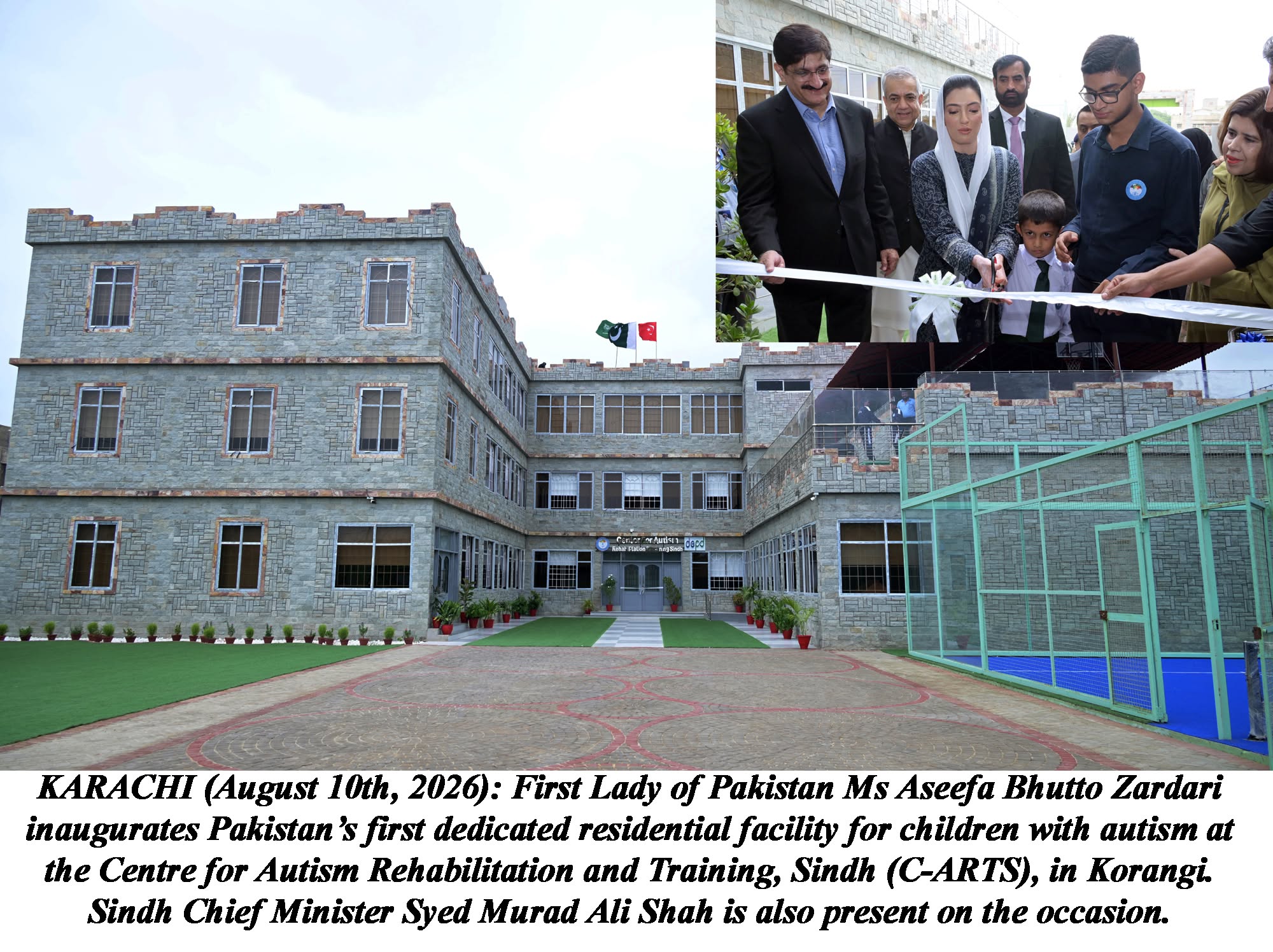
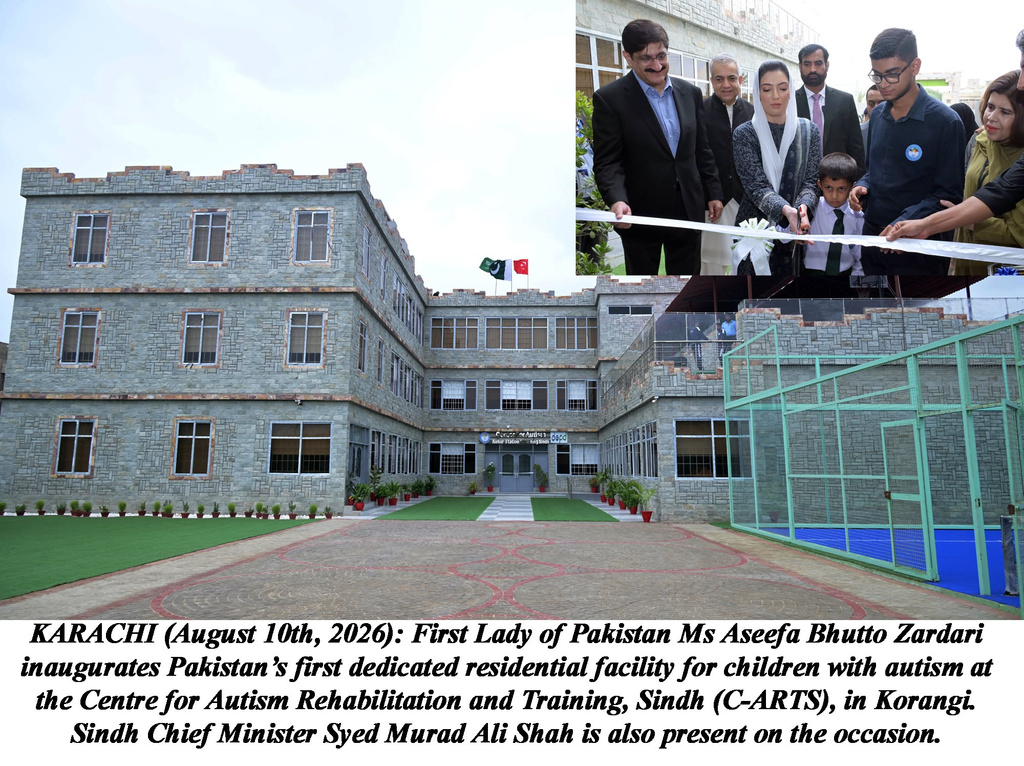
First Lady of Pakistan Aseefa Bhutto Zardari inaugurated Pakistan’s first dedicated residential facility for children with autism at the Centre for Autism Rehabilitation and Training, Sindh (C-ARTS), in Korangi.
Sindh Chief Minister Syed Murad Ali Shah was also present at the inauguration ceremony, which marked a major development in the provision of specialised, long-term care and rehabilitation services for children with autism in Pakistan.
The newly established facility has been designed to provide a safe and supportive environment for children requiring specialised care. It will offer residential accommodation, therapeutic interventions, educational programmes, behavioural support, life-skills development and vocational training under one roof.
According to C-ARTS officials, the facility will cater to around 250 children and will operate through a multidisciplinary team trained in evidence-based autism intervention programmes. It will provide two major forms of support: respite care for children with severe behavioural challenges requiring short-term professional assistance, and long-term residential care for children who do not have guardians or adequate family support.
Addressing the ceremony, Chief Minister Murad Ali Shah described the project as a symbol of hope, inclusion and dignity for children with autism and their families. He said the Sindh government was committed to ensuring that children with autism have access to quality diagnosis, education, rehabilitation, life-skills training and opportunities to lead more independent lives.
The chief minister said C-ARTS was established in 2018 with the vision that every child with autism should have opportunities to learn, grow and realise their potential. He noted that the institution has since developed into one of Pakistan’s largest autism support and rehabilitation networks, serving more than 1,500 children and their families.
Murad Ali Shah also highlighted the expansion of autism services across Sindh. He said 10 C-ARTS centres are currently operational in Karachi, Hyderabad, Shaheed Benazirabad, Gambat, Sukkur and Larkana, providing free services including diagnosis, education, rehabilitation, behavioural therapy, life-skills training, vocational development and family counselling.
The chief minister announced that 13 additional C-ARTS units are under construction or nearing completion in Karachi and other districts, including Gulshan-e-Iqbal, Model Colony, Nazimabad, Landhi, Hyderabad, Matiari, Mirpurkhas, Larkana, Tando Muhammad Khan, Sukkur and Shaheed Benazirabad.
He further announced plans for the establishment of inclusive parks in Landhi, Malir and North Nazimabad, with another proposed in Bahria Town subject to availability of suitable land. The parks are planned to include accessible play equipment, sensory-friendly spaces and safe recreational areas where children of all abilities can interact and participate together.
Murad Ali Shah said the Sindh government’s autism support model had attracted interest from other parts of the country. He disclosed that Sindh had signed memoranda of understanding with the governments of Balochistan and Islamabad Capital Territory to provide technical expertise and institutional support for the establishment of similar autism centres.
C-ARTS CEO and Chief Autism Consultant Irum Rizwan briefed participants about the newly inaugurated facility, its services and future expansion plans. The ceremony was attended by government officials, members of the diplomatic and development community, autism specialists, educationists, parents and civil society representatives.
Interacting with children at the facility, Aseefa Bhutto Zardari stressed that children with autism are valuable and capable members of society. She emphasized the need to create supportive environments where children can develop their abilities, learn with confidence and participate fully in society.
The inauguration represents a significant step towards developing an integrated model of autism care in Pakistan, bringing residential support, rehabilitation, education, behavioural services and life-skills training together within a dedicated facility.
The initiative is also expected to provide much-needed support to families who face difficulties in caring for children with complex behavioural and developmental needs, while promoting greater inclusion and dignity for people with autism.