
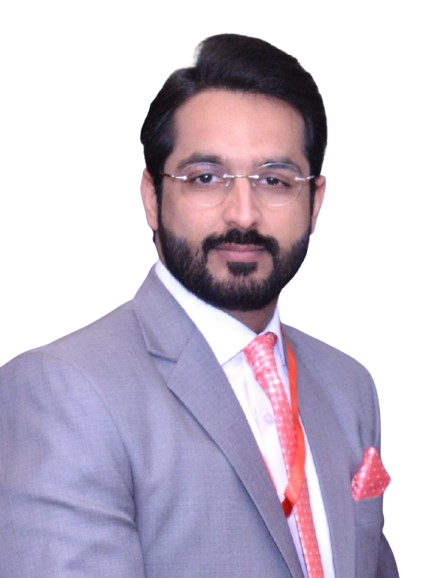
By Dr. Usman Waheed, Associate Professor, Islamabad Medical & Dental College, Islamabad, Pakistan
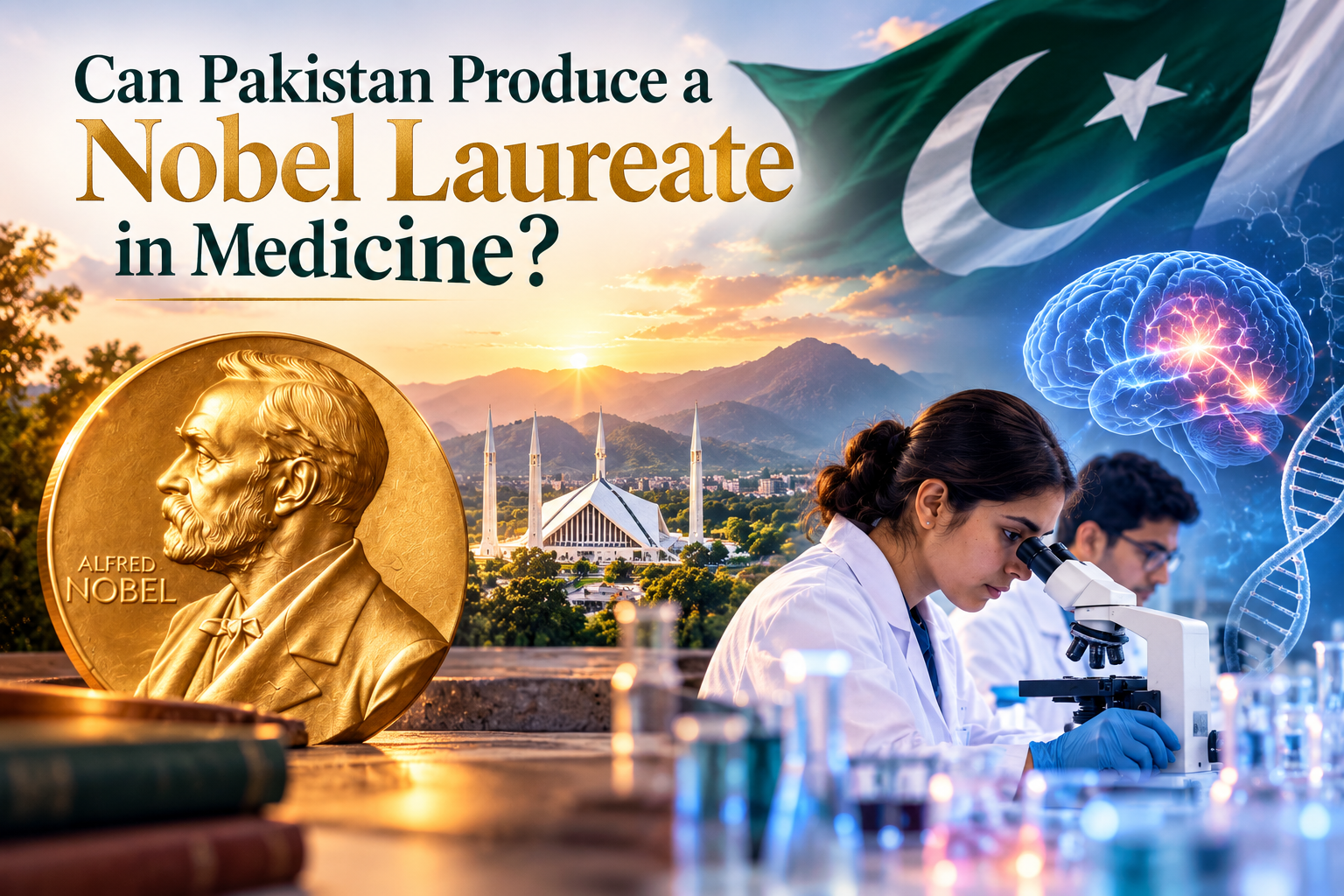
Every October, when Sweden announces the Nobel Prize in Physiology or Medicine, an interesting question comes to my mind: when will a scientist from Pakistan be nominated for, or perhaps even win the world’s most prestigious prize in medicine?
Pakistan is rightly proud of its two Nobel laureates. Professor Abdus Salam won the 1979 Nobel Prize in Physics, while Malala Yousafzai won the 2014 Nobel Peace Prize. Their achievements demonstrated that Pakistan can produce individuals whose work resonates far beyond its borders.
Yet Pakistan has never won the Nobel Prize in Physiology or Medicine. As for nominations, an important clarification is necessary. Nobel nominations, identities of nominators and the Committee’s deliberations remain confidential for 50 years. We therefore cannot state that a Pakistani has never been nominated in recent decades. What we can ask is: what would it take for Pakistani biomedical scientists to produce work worthy of Nobel nomination and eventually a Nobel Prize? Both would be remarkable achievements.
The Nobel Prizes originated from the will of Swedish scientist and inventor Alfred Nobel in 1895 and were first awarded in 1901. Nobel’s original prizes covered Physics, Chemistry, Physiology or Medicine, Literature and Peace. More than the medal, diploma and monetary award, their prestige comes from recognizing work that provides the “greatest benefit to humankind.”
The 2026 Nobel Prize in Physiology or Medicine offers a fascinating example. It has been awarded to Dr. Karl Deisseroth (USA), Dr. Peter Hegemann and Dr. Georg Nagel of Germany for discoveries concerning light-gated ion channels and optogenetics. Their work helped establish a technology through which selected nerve cells can be controlled using light, enabling scientists to investigate how neural circuits contribute to memory, emotions, behaviour and other brain functions. Optogenetics is also being explored for clinical applications, including restoration of vision.
There is an important lesson here for Pakistan. Nobel-winning discoveries do not necessarily begin with spectacular clinical trials or expensive medicines. Sometimes they begin with a curious observation in basic biology whose importance is initially uncertain. Scientists may follow that observation for decades until it transforms an entire field. This requires more than brilliance; it requires an ecosystem in which curiosity can survive.
Pakistan does not lack talented doctors and scientists. Pakistani biomedical researchers work successfully in some of the world’s leading institutions, while excellent researchers also work within the country despite considerable limitations. The real challenge is whether our academic environment enables talented people to move from conducting research to making discoveries.
Our medical academic system has historically placed considerable emphasis on the number of publications required for appointments and promotions. Research can consequently become an administrative requirement rather than an intellectual pursuit.
As someone who has worked as an editor with several national and international scientific journals, I have observed this problem closely. Too often, the question is: “How many publications do I need for my promotion?” It should increasingly become: “What important scientific or clinical problem am I trying to solve?”
A researcher may publish dozens of papers without fundamentally changing a field, while another may spend 15 years investigating a single biological mechanism and eventually transform medicine. Pakistan needs scientific publications, but quantity alone cannot define research excellence.
Research integrity is equally important. Gift, guest and ghost authorship are international problems, not uniquely Pakistani ones, but they exist in our academic environment. A person’s name on a scientific paper should represent genuine intellectual or scientific contribution not hierarchy, friendship, reciprocity or professional convenience. When publications become currency for promotion, questionable authorship practices can flourish. We must therefore make quality, originality, integrity and impact more valuable than numbers.
Academic book writing deserves attention too. Producing a high-quality medical or scientific textbook may require years of scholarship, yet book authorship receives limited recognition within medical promotion frameworks. PM&DC does not provide the same academic credit for books as conventional research publications, whereas HEC has mechanisms to recognize and encourage scholarly book writing. A mature academic system should recognize diverse forms of scholarship, including original discoveries, books, patents, clinical innovations, guidelines and technology development.
Fundamentally, research needs time, money and freedom to fail. Major biomedical discoveries may require decades. Researchers need laboratories, reliable equipment, reagents, technical expertise, biostatistical and bioinformatics support, protected research time and continuity.
Pakistan’s universities, including medical universities, operate under serious financial constraints, while modern biomedical research is increasingly expensive. Genomics, proteomics, molecular diagnostics, neuroscience, regenerative medicine, artificial intelligence, nanomedicine and clinical trials require substantial resources.
Funding alone will not produce a Nobel Prize, but internationally competitive science is extremely difficult without sustained funding. Pakistan needs not simply more grants but different kinds of grants. Imagine identifying exceptionally promising biomedical research groups and funding them competitively for 10 years to pursue major problems such as hepatitis, diabetes, antimicrobial resistance, tuberculosis, cancer, genetic disorders or regenerative medicine.
Instead of asking, “How many papers did you publish?”, ask: “What have you discovered?”
Brain drain presents another challenge. Many talented Pakistani scientists leave for advanced training and establish successful careers overseas. International mobility is beneficial; the problem arises when it becomes permanently one-way. Rather than attempting to stop brain drain, Pakistan should encourage brain circulation through joint laboratories, adjunct appointments, visiting professorships, doctoral co-supervision, shared grants and technology-transfer programmes linking diaspora scientists with Pakistani institutions.
The transformation must also begin early. Research methodology taught only in classrooms is insufficient. Medical students should enter laboratories, develop hypotheses, work with data, understand statistics, experience failed experiments, learn research ethics and write papers under genuine mentorship. Young faculty likewise require protected research time rather than being overwhelmed by teaching, clinics, examination and administrative responsibilities.
Pakistan, through HEC, could also establish shared national or regional core research facilities for genomic sequencing, proteomics, advanced microscopy, bioinformatics, biobanking and clinical trials instead of requiring every university to purchase expensive equipment independently.
Promotion criteria should gradually move beyond counting publications towards originality, citations, research leadership, patents, technology transfer, clinical impact and contribution to society.
At the same time, Pakistan should not create a “Nobel mission” with a deadline for producing a laureate. A Nobel Prize is an outcome, not a research policy. Our objective should be to create an environment where a Pakistani scientist can pursue an important question for twenty years without abandoning it because funding ended, equipment failed, reagents became unavailable or promotion demanded unrelated publications.
If we create that environment, Nobel nominations may follow. One day, a Nobel Prize may follow too.
There is no scientific reason why a transformative discovery in infectious diseases, genetics, cancer, neuroscience, regenerative medicine, artificial intelligence or precision medicine cannot emerge from a Pakistani scientist.
Perhaps that future scientist is already sitting in a medical college classroom or working quietly in a laboratory somewhere in Pakistan.
We should not burden that young scientist by saying, “Win Pakistan a Nobel Prize.” Instead, we should provide education, mentorship, funding, research integrity, international exposure, infrastructure, intellectual freedom and, most importantly, time.
Then we should ask:
“What problem do you want to solve for humanity?”
If Pakistan creates a generation of scientists capable of answering that question and gives them the environment to pursue their answers, we may one October hear a Pakistani name associated with the world’s highest scientific recognition, and perhaps eventually announced as a Nobel laureate in Physiology or Medicine.
That would be a proud day for Pakistan. But the greater achievement would be the scientific culture we had built to make that day possible, and the benefit to humanity created along the way.
[The writer is a PhD in molecular biology with fellowships in transfusion medicine and pathology. The views above are his own and do not reflect those of his employer. He can be reached at drusman.waheed1@gmail.com]