
Editorial Commentary by Jawaid Ali, Karachi
For years, Pakistan’s HIV epidemic has attracted national attention only when major outbreaks make headlines. Yet the real story has been unfolding quietly in blood banks across the country. A recently published systematic review and meta-analysis, based on more than 12.6 million blood donors over nearly four decades, offers the clearest picture yet of Pakistan’s HIV burden and where it may be heading if urgent action is not taken. The study was conducted by a multidisciplinary research team led by Assoc. Prof. Dr. Usman Waheed of Islamabad Medical & Dental College, in collaboration with researchers from Pakistan, the United Kingdom, and Lithuania.
Drawing together evidence from 125 studies conducted between 1988 and 2026, it is the largest national assessment of HIV among blood donors ever undertaken in Pakistan. Blood donors are generally regarded as one of the healthiest segments of society. If HIV is increasingly being detected in this low-risk population, it raises important concerns about transmission in the wider community.
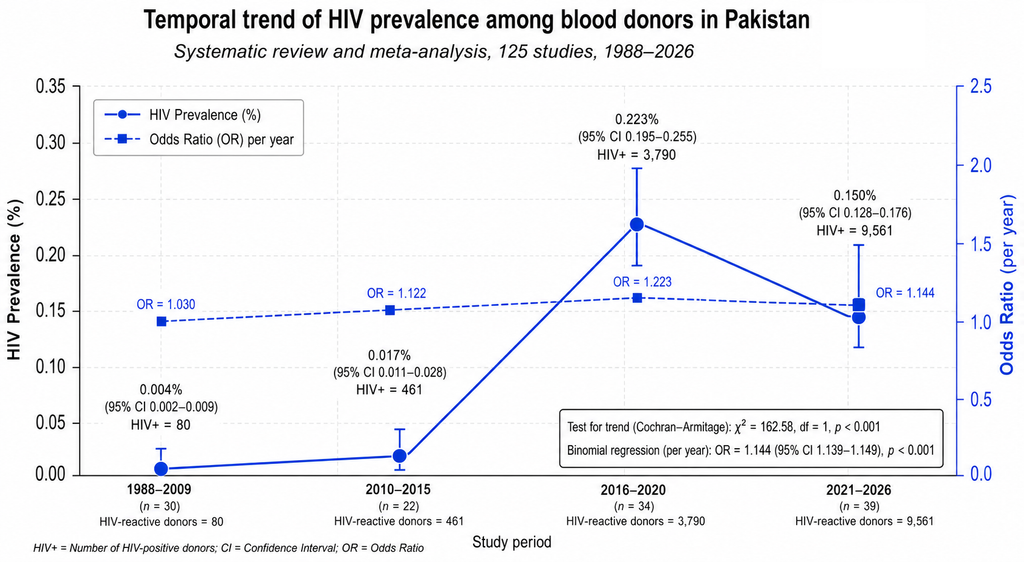
The encouraging news is that the overall HIV prevalence among blood donors remains relatively low at 0.109%. However, the study also found a statistically significant increase in prevalence over time, indicating that HIV is gradually spreading beyond traditional high-risk groups. This trend should concern policymakers, healthcare professionals, and the public alike.
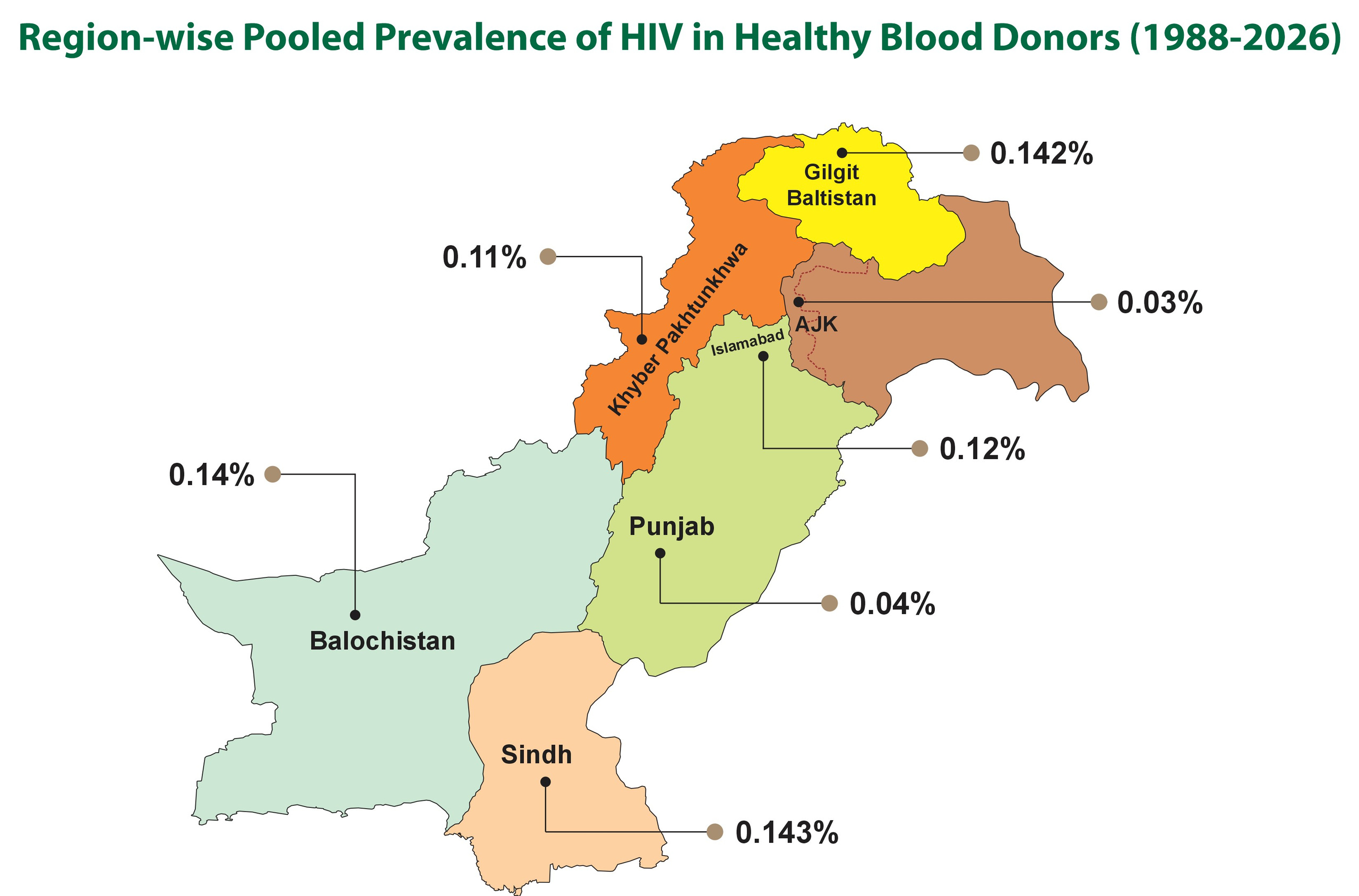
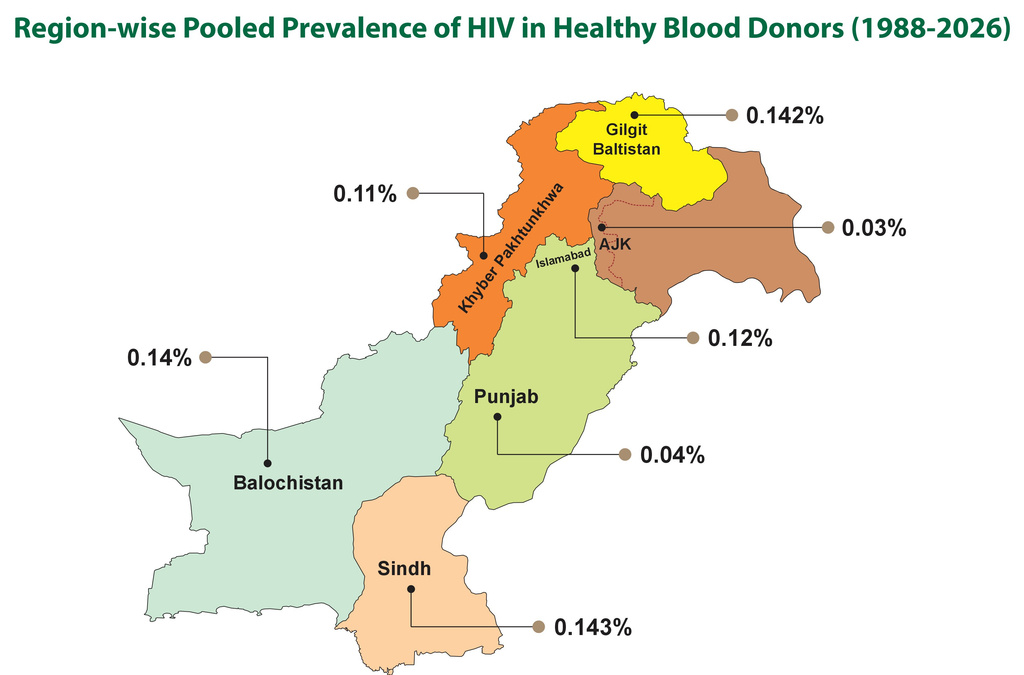
One of the most important findings is the marked regional variation. Sindh recorded the highest HIV prevalence, followed by Gilgit-Baltistan and Balochistan, while Punjab and Azad Jammu & Kashmir reported comparatively lower rates. These differences suggest that a uniform national strategy will not be sufficient. Instead, provinces require targeted interventions based on their unique epidemiological patterns.
The findings also reflect recent events. Pakistan has witnessed several localized HIV outbreaks, particularly in Sindh, exposing weaknesses in infection control, unsafe healthcare practices, and delayed diagnosis. These outbreaks were not isolated incidents but indicators of deeper systemic challenges.
The study further highlights the importance of modern laboratory technology. Blood centres using advanced screening methods such as Nucleic Acid Testing (NAT) and chemiluminescence-based assays detected more HIV infections than those relying on conventional techniques. This does not necessarily mean HIV is more common in those areas; rather, better technology identifies infections that conventional tests may miss. Investing in sensitive diagnostic technologies is therefore an investment in patient safety.
Another critical issue is Pakistan’s continued reliance on family and replacement donors (82%). Globally, regular voluntary blood donors provide the safest blood supply. Expanding voluntary blood donation should therefore become a national priority rather than an annual awareness campaign.
Equally important is ensuring that blood donors who test positive are promptly linked to confirmatory testing, counselling, and treatment. Every missed opportunity for diagnosis also represents a missed opportunity to prevent further transmission.
The timing of this research is significant. With the Government of Pakistan establishing a Prime Minister’s Task Force to address the country’s growing HIV challenge, this landmark study provides valuable evidence for informed policymaking. Strengthening surveillance, enforcing infection-control practices, expanding voluntary blood donation, improving donor referral systems, and investing in advanced screening technologies should form the cornerstone of the national response.
Pakistan now has the scientific evidence. The challenge is no longer identifying the problem, it is translating that evidence into decisive action before today’s warning becomes tomorrow’s crisis.